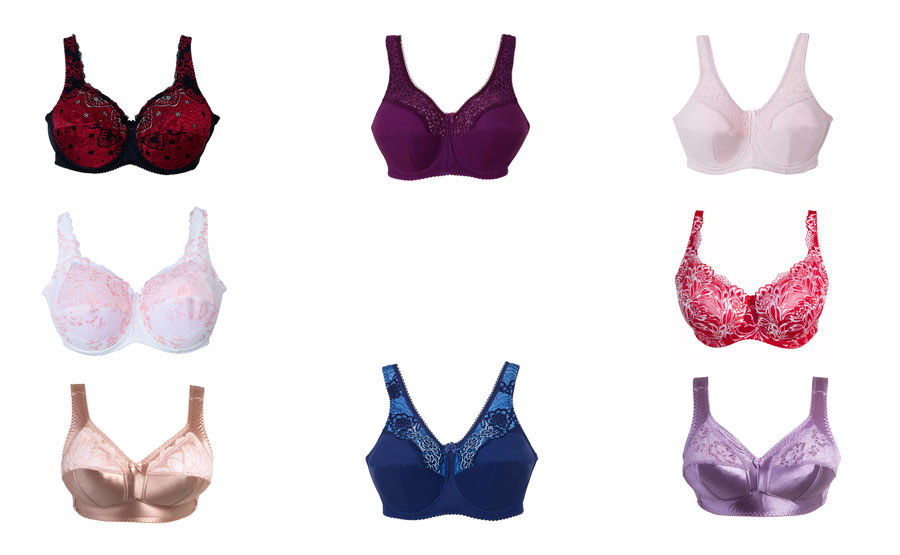
Lingerie Buying Guide for Men

Cause for Excitement

Men, buying lingerie for your woman, or indeed women, is dangerous business. If you are afraid, good—do it anyway—mistakes are important. And really there is nothing to fear, only cause for excitement. Think of it: you find a woman beautiful. Now why would you not want to see her body adorned with underwear designed expressly to A. make her feel sexy and comfortable (thereby giving her more confidence) and to B. seduce you, her man? Don’t say, ‘Because I want to see her naked.’ Whilst that is a major concern, we can do better. Imagine what such a gesture of love from you will do to her, and in course to you …

Use Spy Skills: Which Shop, Style, Fabric, Fit, Size …

So visit her favourite shop. Talk to the saleswomen or read the reviews. Don’t be an ass. Develop your tastes and know hers. Why do you like/dislike that bra over another, and why would she? For instance my woman objects to balconette bras, and I can picture the slight disappointment behind her joy were I to offer her another red or black bra. And what about knickers? Think about materials; cotton, silk, various synthetics or mixtures. Geek out and get to know the styles available … And finally to the very lynchpin of all this effort. Get the size right. Here you get to use your spy-like cunning, rummaging in drawers as she bathes.

Prepare to Be Surprised

Or perhaps choose the gift together; that way she will try on items for your approval, and you would be pleased by the surprises that may come out of this. Even consider having a proper fitting. It’s shocking how many women don’t wear their true size and don’t know the dangers it poses to their health. In any case be bold and if it helps remember that you may get to undress her.

Key Elements of a Bra and Their Function

Here are the key elements of bra design and their core functions. (You can always see our videos on how to measure your bra size accurately and how to achieve a perfect fit for your bra.)

blog post bra elements combined image

1. Band

The band is the part that runs around the rib cage of the wearer and is one key element of the support structure. Most of the weight of the breast (around 80%) is distributed throughout the band. It is imperative to wear the correct band size.

2. Centre Panel

For a good fit the centre panel should touch the wearer’s torso and not pull away from the body. Usually, the taller the centre panel, the greater the support and coverage it provides.

3. Cups

The cups are the parts of a bra that hold the breasts. A cup should enclose 100% of a breast’s flesh, with no gaps or over-spill at the top, sides, or bottom. Here is how to determine cup size.

4. Underwire

The underwire provides added support and lift to the breasts. It is a metal, sometimes plastic, U-shaped piece sewn into the bra cup from the centre panel to the armpits. It should completely encase the breasts like a cradle; meaning the wires should be behind the breast root, not on top of the breasts.

5. Straps

The straps go over the shoulders and keep a bra in place. They provide 20% of the support.

6. Wings

Wings are the panels that go from the cups, round the sides, and to the back. They, together with the band, are key to a bra’s support. Different materials are used for different levels of support. The most important thing is how well the wings hug the body without ‘travelling’. Wings also help manage any bulge.

7. Strap Join

The strap join is where the straps attach to the bra band in the back. The leotard strap join, aka ballet leotard back, is recognised for its rounder shape and is a sign of a supportive bra as it distributes weight more evenly throughout the band, taking weight out of the straps and the shoulders.

8. Closure

The most common type is a hook-and-eye closure that may be located in the middle centre of the bra’s back or at the front. Other types include clasp closure or, for elastic bras, no closure at all.