Rediscovering Yourself After Mastectomy: Ms Pomelo Medical Bras

Cancer and the Role of Lingerie on the Road to Recovery

Body image really suffers from breast cancer and access to a good bra is critical for a woman to revive herself. The connection is intricate. Let us explain.

For the immediate post-operative period, a properly constructed bra is key. It keeps the surgeon’s work in place. It helps shape the breast. It visually restores the natural form for a woman, helping her look feminine, whole, and attractive in her clothes.

Another point is that physical discomfort and anxieties surround women of all ages; whether it is a damaged nerve, breasts that do not feel the same, physically unappealing scars, suffering from lymphedema, or worries about how to enter relationships – they are there all the time.

When the fight for survival is won and moving forward becomes necessary access to functional attractive lingerie is absolutely key. People might think “breast cancer is serious, bras are not”, but this isn’t quite right.

For a woman clothing is the signpost of personal communication – this is how she communicates to the world about changes she is making in her life. Denying those choices is inhumane and short-sighted.

It might seem “fake it till you make it”, but for a woman whose ground has been forced from underneath her it helps see immediate improvement and gives something real to hold on to while she gradually builds strength to move forward.

Pain Points in the System

  1. Lacking Support

For a woman going into surgery, timely access to quality, standardised products is critical. However these support systems are undeveloped.

In an ideal world the patient is fitted for a bra in the hospital and is given a set before the surgery. This does happen in some NHS trusts, but they are the minority.

Usually the patient is told to bring a well-fitting bra for the operation. First, she is overwhelmed with the news and too distressed to shop for bras. Second, most patients draw a blank at the term “well-fitting bra”, as most women do. Third, breast nurses (the key liaison with the patient) are increasingly overstretched and often are not aware of all products on the market; they refer a patient to online shopping or 3rd parties with a general spec to find ‘an M&S-type sports bra which is meant to provide compression for daytime wear and ensure surgical sutures are in place’. Unsurprisingly, many show up with the wrong bra.

How is this an issue? Because it undermines the work of the surgeon, nurses, and the whole medical system, not to mention, compromises women’s recovery.


  1. Absolute Shortage of Larger Sizes

The situation is particularly poor for larger sizes (cups D+ across most bands, 32–46), which are scarce due to a historical supply-side gap and not available at reasonable prices.


How Did We Arrive at This View?

Over a 2-year period we ran regular workshops in breast clinics across the NHS and Harley Street. We interacted directly with patients (ages 30–70) in the context of bra- or prosthesis-fitting.

We worked closely with breast nurses to develop our product. Our consultation group included nurses from 11 NHS trusts and 5 Harley Street clinics.

We attended cancer support groups.

We supplied our product to select London hospitals.

We engaged with all major breast cancer charities in the UK.


What Are the Key Considerations in Designing a Mastectomy Bra?

As a bra maker for fuller chests, we prioritise support and comfort. As regards mastectomy, here is what we consider:

Function:

  • Smoothing the body – there is often extra tissue in the underarm area (formed as a result of skin/fat transplanting) that may rub and become painful – we use tall wings to smooth that
  • Supporting and giving good shape to a breast and a prosthesis (which often is heavier than the natural breast tissue and differs in shape); also preserving the integrity of the look for lumpectomy patients who need a foam-lined cup
  • Comfort and breathability – we minimise seams and use hypoallergenic super-soft cotton lining, so the patient feels cocooned; this is especially welcomed by sensitive chemo- and radio-therapy patients
  • Giving full confidence – pockets are designed such that the breast form stays in its place without ‘traveling’ or showing at the surface of the cup; we also use tall front panels to conceal scars
  • Moisture absorption – surgical wounds, potions and lotions require good moisture wicking – our bilateral pockets address that
  • Practicality and ease of maintenance – achieved with choice of colour, fabrics, wash-ability, and durability
  • Adaptability of design – our post-operative designs can be worn well after the recovery as a regular mastectomy bra or comfort wear


Aesthetics:

  • The bra needs to look good and be appropriate for various size groups and ages; breast cancer is no longer associated with older age; the most diagnosed age group is 30–40, and the designs need to reflect this.
  • We offer 2 colour combinations (cream/pink and black/red) but are open to more as demand grows


Why Do We Do This?

We are a small group of women who got together to solve the shortage of good plus-size bras. We give women confidence with our products and bra health education.

Having seen so many mastectomy patients personally, we created our mastectomy range to serve women’s needs through illness to full recovery.

Our mastectomy bras are priced affordably and designed and manufactured to a high quality. This is how we support our community.


What Do Our Clients Say About Us?

Size 40F: “The bra is absolutely perfect … thank you for the speedy delivery … I was worried I wouldn’t get it before my op … My doctor at Kingston Hospital was very impressed with the bra and asked for your contacts …”

Size 40DD: “My wife loves your product because unlike the hospital’s bra that shows more of the false breast … yours cover well and do not show it … my wife feels great in her clothes now … makes me happy too.”

Size 40F: “Bra fits brilliantly ideal for larger cup sizes. Really pleased with it as it’s ideal for my mother who suffers with Parkinson’s and unable to fasten a bra at the back.”

Size 42C: “It is very pretty and very comfortable. The best mastectomy bra I have experienced since my recent surgery.”

Size 44E: “It is very difficult to find pretty mastectomy bras and for my size 44E normally its only black or white bras you can buy I can’t tell you how happy I was to find this one and the fit is perfect.”


Our Product Range

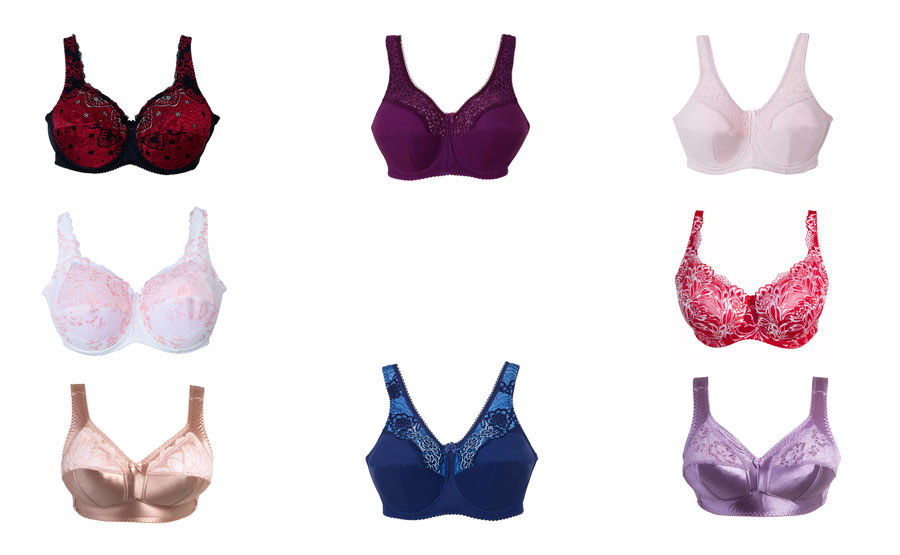
There are 5 styles in our post-surgery range. Our post-operative kit includes a daytime compression bra and a night vest. Our fashion styles are Red Power and adaptations of our bestsellers Pola Negri and Showstopper.

Our products cover sizes 32 D–H, 34-46 C–H. We also make custom sizes on request.
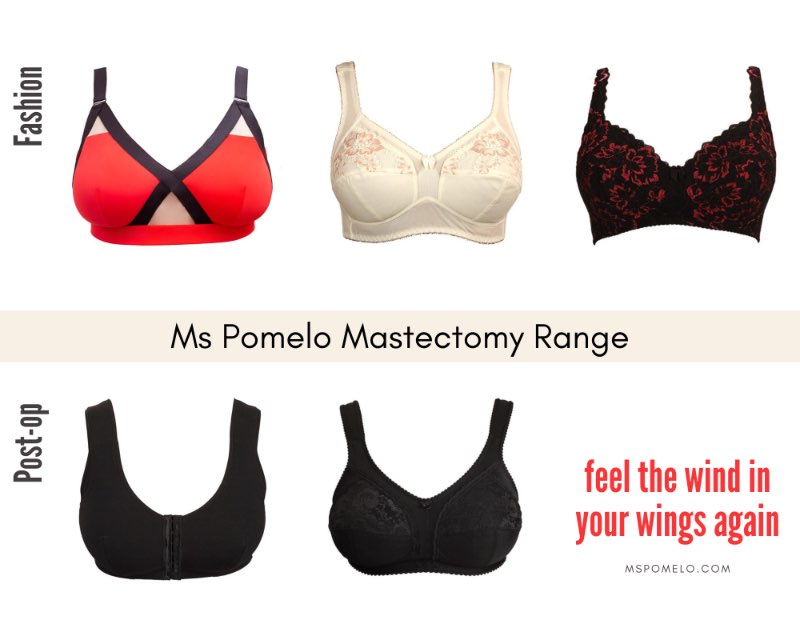
ms pomelo mastectomy range


What Support Do We Offer?

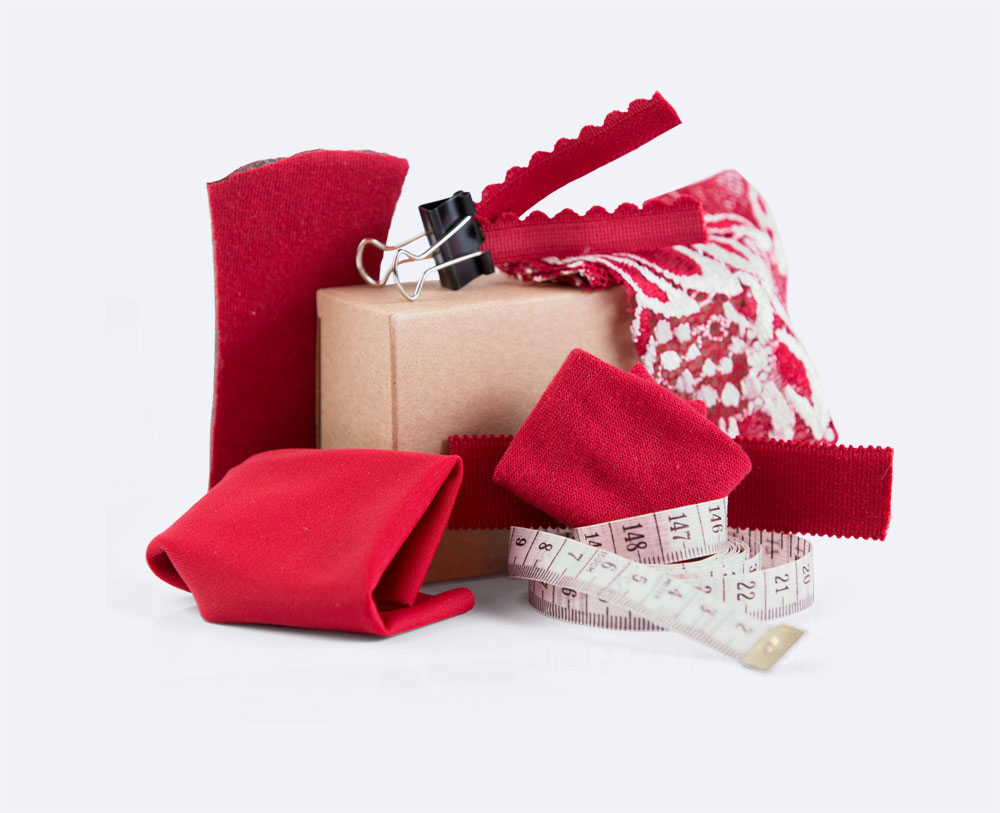
We offer a free FitKit for you to measure your size and feel the materials your prospective bra will be made of.

We also offer advice on the best bra for your situation.

We continuously aim to roll out new styles and invite our customers for product testing.


Where Can You Buy the Product?

Our fashion products – Red Power and Pola Negri Pocketed – are sold on our website. The post-op product is sold on eBay.


Questions/Comments

We welcome questions and customer engagement – please drop us a note on care@mspomelo.com and sign up for our newsletter or follow us on our social platforms, Instagram or FB.

How Should I Choose the Correct Size for my Face Mask?

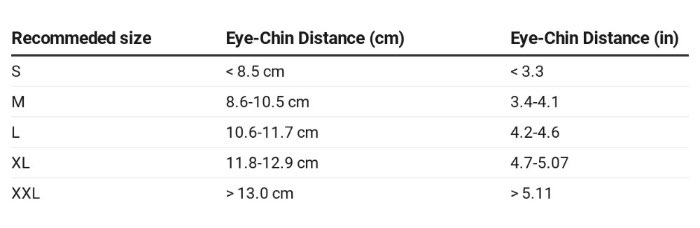
The eye-chin distance measurement is the primary method for determining the correct mask size.

Step 1: Measure your eye-chin distance

Instructions

  • Use a ruler to measure the vertical distance between the lower eyelid and your chin (see the photo).
  • If needed, use a mirror or engage help of a friend.
  • Compare your measurement to the size table below to find your recommended size.

Step 2: Cross-check results for your weight

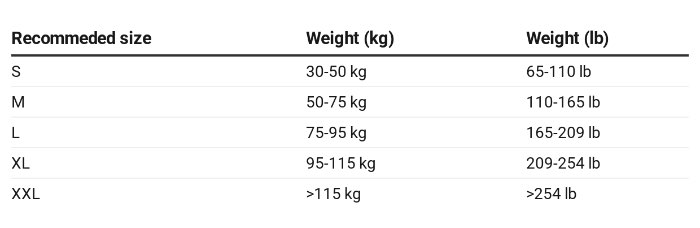
If you are an average frame, the eye-chin distance measurement is sufficient. If you are heavier, check your weight and round the results one size up using the following table.

We make sizes Small through XXL. Features and details are available on our  face mask product page.

How to Avert Environmental Disaster One Bra at a Time and Build a New Consumer Identity in the Process (4/4)

This is Part 4 of our Environmental Series. Read Part 3 here.

The Game Plan (cont’d)

Step 4. Use cultural heritage to craft your identity.

Japanese Sashiko stitching provides a very interesting example of treating clothing as a living energy. In Japan during the Edo era the lower classes were forbidden to adorn their clothing. They primarily wore indigo-dyed cotton and linen, which due to bactericidal properties had a ward status. There was little opportunity to replace old clothes with new, and so the Sashiko stitching, a beautiful darn for mending the damaged pieces, was born. Despite the Spartan conditions of the period, the Sashiko stitching provided not just a unique adornment but also enabled clothing to serve multiple generations. Families developed a culture of respect towards clothing and a philosophy that multi-generation family energy empowered one’s life; clothes became family talismans. Soon the concept spread to the more powerful classes and a culture emerged around not throwing anything away, treating clothing with respect whilst they served their owner, and saying goodbye with dignity when it was time.

This concept is very much alive in Western culture. We all have things we love, whether it’s a toy we carried around as a kid, or a bra that is beat up and greyish, but we insist on wearing as our lucky bra.

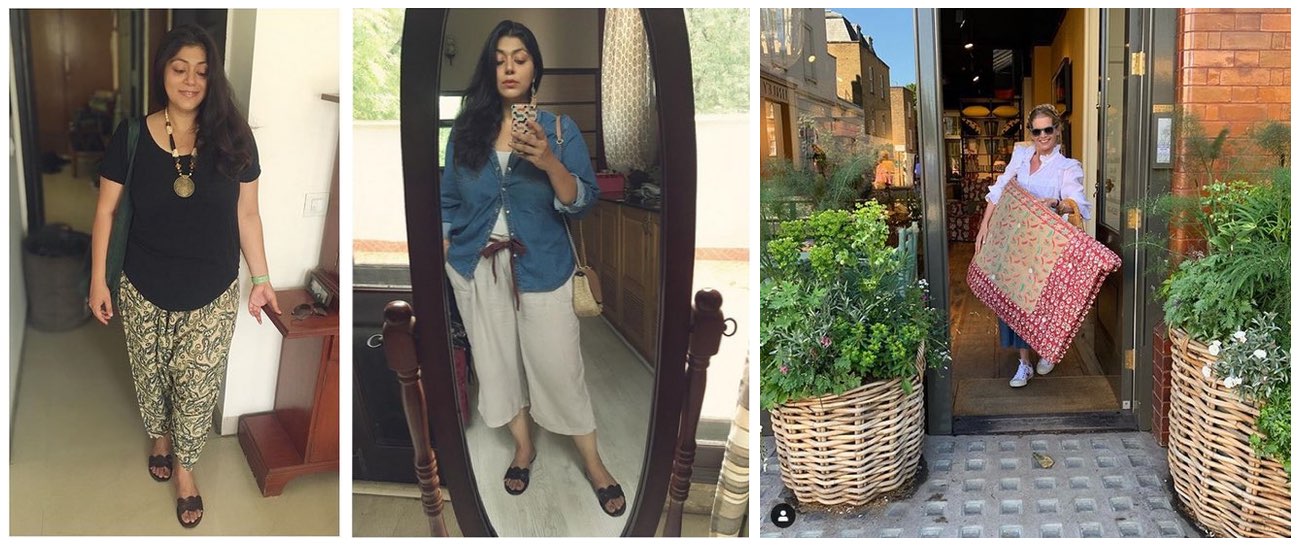
The idea of how old can convert into a very useful new, without feeling like creativity brought on by clothing rationing, is having a renaissance and is championed by various figures. In her recent post blogger Sonalini Chaudhry (aka @theroundgirl) shared how after going 2 sizes up she converted her old dhoti pants “with a few deft turns of needle and thread”, and how she learnt to mix older items in her closet with newer ones to achieve fresh results. Another example is the adventurer and TV presenter Alexandra Tolstoy who shared how she patched up squab cushion to revitalise her family sofa (photos below).

It is silly to talk about passing a bra from generation to generation – bras are individual things. But imagine finding somewhere in the family bins your grandmother’s bra and bloomers with amazing embroidery and delicate seams? You might not even be sure what the bra is made of – it looks translucent and could be fine cotton or even organza. You realise your grandmother was not some ancient creature with a cane. She was spectacular. And suddenly you feel the warm support of previous generations and feel ignited to live a life that’s meaningful and extraordinary.

These values are universal. It is our heritage and collected energy that give us perspective as humans. Find that point in your history and in your wardrobe and set the course that rings true.


On the photos

The Sashiko Stitch. Illustration by Ms Pomelo.

Zack MacLeod Pinsent makes his own clothes and dresses in Regency style. Photograph: Antonio Olmos/The Guardian. Nora Thoeng’s style is inspired by 40’s and 50’s: ‘Dressing up brings so much joy into my life.’ Photograph: Nora Finds. From the man who wears 17th-century clothes to the woman whose outfits are straight out of the 1950s, six people explain their deep devotion to period dress. The Guardian.


Further reading

Sarah Butler. 2018. Is fast fashion giving way to the sustainable wardrobe? The Guardian.

Kelly-Leigh Cooper. 2018. Fast fashion: Inside the fight to end the silence on waste. BBC News.

Alabama Chanin. 2016. The History of Silhouettes. The Alabama Chanin Journal.

Gwen Cunningham. 2017. Step 2: Design Out Waste. Circle Textiles Program at Circle Economy.

Vanessa Friedman. 2017. The New Meaning of Fast Fashion. The New York Times.

Roger Harrabin. 2018. Fast Fashion is harming the Planet, MPs say. BBC Environment Analysis.

Harriet Johnson. 2018. Sashiko Embroidery: What it is and How to Do it. Clothing Care Co.

Ammar Kalia. 2019. From the man who wears 17th-century clothes to the woman whose outfits are straight out of the 1950s, six people explain their deep devotion to period dress. The Guardian.

Palko Karasz. 2019. France to end disposal of $900 million in unsold goods each year. The New York Times.

Molly St. Louis. 2017. Research Shows That the Clothes You Wear Actually Change the Way You Perform. Inc.

Brett Mathews. 2015. Closing the Loop: Circle economy work. MCL Global.

  1. Marie Kondo Folds a Perfect Underwear Drawer. New York Magazine.

Lucy Norris. 2014. The limits of ethicality in international markets: Imported second-hand clothing in India. Department of Anthropology, UCL.

Elizabeth Paton. 2019. In Britain, Politicians Shy Away From a Crackdown on Fast Fashion. The New York Times.

Elizabeth Paton. 2019. Will a ‘Fashion Pact’ Make Fashion Greener? The New York Times.

Jess Peter. Transformable Fashion: The Biggest Sustainable Clothing Trend That Never Was. The Fashion Studies Journal.

Adele Peters. 2019. This new IBM recycling tech makes brand new plastic from dirty bottles. Fast Company.

Adele Peters. 2019. All the ways recycling is broken—and how to fix them. Fast Company.

Anuschka Rees. How to assess the quality of garments: A Beginner’s Guide.

Nathalie Remy, Eveline Speelman, and Steven Swartz. 2016. Style that’s sustainable: A new fast-fashion formula. McKinsey & Company.

Tatiana Schlossberg. 2017. Fig Leaves Are Out. What to Wear to Be Kind to the Planet? The New York Times.

Elizabeth Segran. 2019. Zara built a $20B empire on fast fashion. Now it needs to slow down. Fast Company.

Ben Schiller. 2015. Robots Are Coming For Your Recycling (And That’s A Good Thing). Fast Company.

Elizabeth Segran, 2019. The ambitious quest to recycle the world’s bras. Fast Company.

Ushering in a Green 2019: Consumers Resolve to Be Less Wasteful this New Year. ThredUP News.

Andrew Winston. 2018. The Story of Sustainability in 2018: “We Have About 12 Years Left”. Harvard Business Review.

Kate Wood. 8 Reasons to rethink Fast Fashion. Lifehack.

Clothing Knowledge Hub. 2019. WRAP.

How to Avert Environmental Disaster One Bra at a Time and Build a New Consumer Identity in the Process (3/4)

This is Part 3 of our Environmental Series. Read Part 2 here.

The Game Plan (cont’d)

Step 3. Buy wisely/consume smartly.


How Many Bras Do You Actually Need?

According to the statistics, women have 2-3 bras they wear 95% of the time and another 5-8 they never use (poor fit, special occasion only) (source: UK Underwear report 2016, Mintel).


Buying Strategy

(1) An obvious but often overlooked consideration: does your wardrobe have the capacity for a new piece? (2) Think of clothing in your wardrobe you will be wearing this bra with, and plan for matching briefs, to give it a good run. For example, French women rotate 3 briefs with one bra; (3) Buy designs that reflect quality and durability: check that the material is high quality, seams are neat, and check customer reviews for longevity; (4) Buy customer service and after-sale support; ask what guarantees the seller can offer in case a wire pops out.

Design defines 80% of how durable the product is going to be. In the quest for normalising product obsolescence rates, buying the right design is the most effective single contribution you can make as an individual consumer.


Simple Bra-Buying Math

Scenario A: You buy a £10 bra and wires pop out every 2 weeks. This means you need to buy 25 bras per year. Your total expense is £250.

Scenario B: Same as Scenario A but you choose to repair half of your bras, and so you buy 13 bras and take them 12 times to a repair shop (at £5 per repair). Your total expense is 13 x £10 + 12 x £5 = £190.

Scenario C: You buy 3 bras at £45 (these are well made and have product guarantee). You total expense is £135 but these may last you well over a year.


Buy the Right Size/Fit

Wearing the right size and fit is key to your good experience with the bra. Sizing, however, is often inconsistent between brands and styles. To counter that, you can work with a professional bra-fitter or learn the basics of sizing and fit to be able to choose well by yourself.


Care

Wash after 3–4 wears or whenever it gets soiled. Wash in a washing machine: get a mesh bag and wash with similar colours at +30C on a gentle cycle. Avoid fabric softener as it clogs up the synthetic fibres and impairs fabric breathability. Hang to dry. Full care instructions link. There are also health implications for our skin – learn more here.


Repair Where You Can

The most frequent fault bras have is wires popping out. You can stitch up the wire channel opening by hand, or if the job is more serious, you can send it to us. We do free repairs as part of our product guarantee promise.


Use Alterations

The band may feel looser if your weight changes, or straps may feel short/long. We offer free alterations to prolong your experience with the bra.


The Signs of a Bra Being Dead

This is quite difficult to achieve given the high durability of materials used nowadays. The weakest links are the straps and wings losing elasticity, wires popping out, the lining tearing up, and cumulative wear and tear as a result of which the fit no longer works.


Clear Out

When the bra has passed its prime but still can be used, why not wear it for a hiking trip or a gardening session where it will work just the same? The French clear out their entire lingerie drawer once a year.


Secondary Use

You can repurpose a bra as a summer flower basket or cut up its foam as stuffing for a throw pillow. If you absolutely must, gift it to a bra bank but be aware of the actual impact it has on your intended audience. The alleged misuse of distribution channels for second-hand bra trade in developing markets is widely documented and some West African states are banning the trade to enable local producers.


Read onto Part 4 here.


On the Photos

WRAP Textiles Sustainability Guide. Credit WRAP.

How to Avert Environmental Disaster One Bra at a Time and Build a New Consumer Identity in the Process (2/4)

This is Part 2 of our Environmental Series. Read Part 1 here.


The Game Plan

Step 1. Get up to speed on and make peace with your impact on the environment.

The information on the topic is abundant and can quickly become overwhelming. We suggest this carbon footprint guide from The New York Times; it is manageable in that it breaks down the issue into sections – such as clothing, food, transport, recycling – and can be worked through at your own pace.

It turns out plastic, despite being portrayed as the deadly offender, contributes to only 12% of total impact and is no better than paper. Worse, it is our food choices that face reckoning. We are not suggesting you cut out your automobile and airplane travel or that you turn to veganism instantly; rather read the stuff and make peace with your carbon footprint.

Step 2. Know your recycling options.

Globally only 1% of clothing is recycled. When it comes to bras, there are no recycling options in the classical sense, recycling the fibres back to point zero and producing new ones with it. The primary reason for this is modern clothes are made of fabric blends of many natural and synthetic fibres like spandex, polyester, cotton or wool, and each material requires a totally different recycling process. And while globally we see 20% collection rates, fibre sorting and processing, the 2 other elements of the recycling ecosystem, are underdeveloped.

But there are technologies that give us hope. AMP Robotics uses advanced computer vision and machine learning to sort the materials. There is also Fibresort, a machine that detects the fibre composition in carpets and can be adapted to work with textiles. There are also examples of processing technologies that can handle mixed fabrics. A biotech company in France recently demonstrated that it could use a biological process to recycle polyester T-shirts or coloured plastic bottles into clear bottles. Though these companies are in their early stages their technology increases product recycling.

Key catalysts to improving the situation are regulation and consumer activism.

France is the absolute leader in the area with its Extended Producer Responsibility legislation that requires operators (producers, distributors, and importers) in the clothing-, household linen-, and footwear sectors to provide or manage the recycling of their products at the end of their usage.

Our personal hero is Patagonia, the US outdoor and adventure clothing company. Already in 1993 they produced their first polyester fleece jacket from recycled bottles and have since extended their recycled product line to 82, to things like insulated pants, down jackets, and beanies. Patagonia also take products back for recycling when it has reached the end of its useful life.

There are many good choices you can make as a consumer. We discuss them in the next section.


On the photos

How to Reduce Your Carbon Footprint. The New York Times. Illustration by Adam Simpson.

How to Avert Environmental Disaster One Bra at a Time and Build a New Consumer Identity in the Process (1/4)

If you tuned in to any kind of news recently, you are well aware of the environmental issues – compromised biodiversity, water pollution, global warming, etc. – often caused by human activities. While there are no surprises in how we got here, the pace of deterioration is real and the prospect of an environmental meltdown is frightening.

As a bra company, we think about these matters a lot. After all, we are part of the textile ecosystem, the second most polluting force on the planet.

In this piece we share our perspective as a lingerie maker and seller, discuss recycling options for clothing, suggest strategies for making your bras serve you better and longer, and offer historical perspective to help you build your own solution.


How Did We Get Here?

Humans learnt to make clothing in the Palaeolithic Era 40,000 years ago. While styles and fashions have changed over the millennia, the situation remained stable in that the scarcity of clothing determined the consumer’s mindset.

A fundamental shift took place at the turn of the 20th century. A broader role of women in society triggered the requirement for varied wardrobes; multiple activities during the day, like career, social, and sports, meant multiple outfits. In parallel, hemlines travelled actively and technological progress brought on novelty in the materials used. Also, caring for clothing transformed from weekly, if not monthly, to a widely accessible laundry and dry cleaning. On the whole, for the first time in human history, mass production and distribution made clothing affordable to many layers of society.

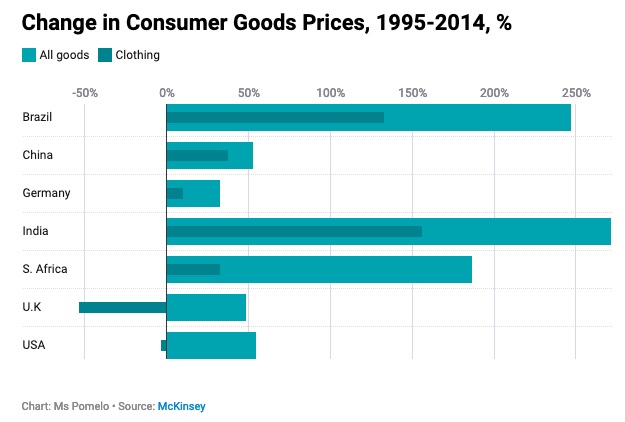
After WWII consumption was encouraged as a way of life, resulting in mass-produced disposable goods. Fashion has been particularly good at applying the tactic of planned and perceived irrelevance. The globalisation of fashion has accelerated the trend: between 2000 and 2014 consumers increased their level of consumption by 60% while using clothing for half as long. Most recently, the rise of the IWIWIWI culture (I want it when I want it) has pushed the delivery time of 3–4 days to same-day delivery, and in some cases, like high-price fashion items sold off-runway, to 30-minute delivery.

This presents us with 2 problems.

Problem 1: Our carbon footprint is out of control and we are on a collision course with nature. Globally, the fashion industry consumes more energy than the international aviation and shipping industries combined (source: UN). Britain buys more new clothes than any other European country, and sends c. 300,000 tons of clothes a year to incineration or landfills. And while the stock incineration practices by Burberry spark an outrage, its damage to the environment is minimal compared to fast-fashion operators like Inditex Group.

Problem 2: We are losing perspective. The idea of disposability (when it’s cheaper to buy new shirt than to clean the one you already own) undermines the whole concept of value over time, and craftsmanship which justifies the price of a garment. Clothes are the signposts of personal communication, and should be careful long-term acquisitions. Otherwise we risk identity whiplash. It goes one step further with bras; they determine our comfort and wellbeing and are key to our secret powers as women. While it may not be obvious why you should choose one bra over another (they look the same and the communication from the brands is often similar), it takes years of expertise to build a genuine article that will make a profound difference to your life.

We have the game plan. Read on to Part 2.


On the photos

Greta Thunberg, a 16-year old Swedish climate activist, has become the refreshing force of the climate change synonymous with action-focused approach. She started skipping school on Fridays to protest for climate change at the Swedish Parliament, classmates followed her, European counterparts imitated her; hence the hashtags #FridaysForFuture and #ThereisNoPlanetB. Credit: Canva.

For corals, the environmental changes brought on by global warming can be catastrophic. When the water gets too acidic, the corals’ rock-like skeletons break down. When it gets too warm, the zooxanthellae (tiny photosynthesizing organisms living in coral tissue and supplying food, oxygen, and bright colours) go into overdrive, producing dangerous amounts of oxygen. To protect themselves, the corals will expel the organisms, turning bone-white in the process—a phenomenon known as bleaching. Heron Island, a spec of sand and foliage on the Southern end of Australia’s Great Barrier Reed, has experienced its worst bleaching events in history during 2016 and 2017. So far it has been spared the worst of the crisis. But scientists fear what the future may hold.

Bra design for fuller busts: feeling secure and supported at all times

Fuller busts are heavy (can weight up to 1.5-2kg each) and pose a number of challenges for a bra maker:

  • Weight distribution is critical for the health of the backbone;
  • Support bust in its natural position through movement without restraint – breasts move in a sinusoidal shape, which makes the task akin to building a suspension bridge;
  • Breathability – sensitive warm mass is prone to irritation and skin infections;
  • Giving shape – framing the bust attractively and fitting it under clothing.

Everything in the design is subjected to delivering on the challenge:

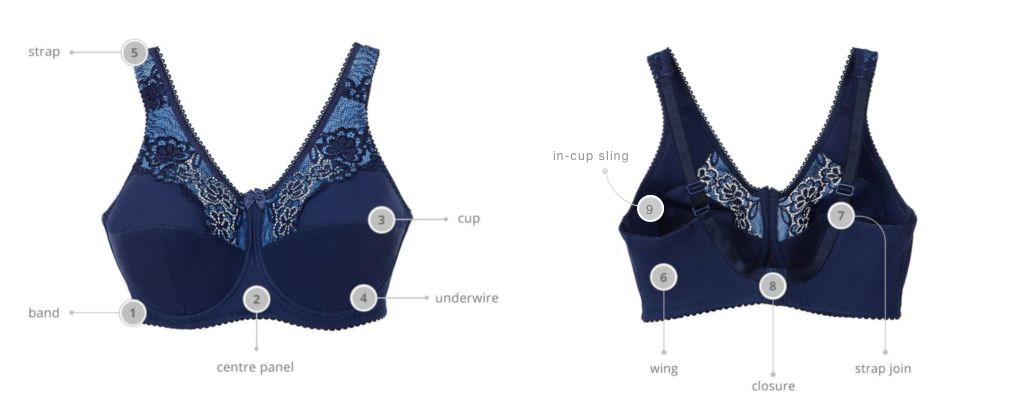
(1) Wider elastic at the band enhances the stability and prevents roll-up;

(2) Tall centre panel for greater support and coverage;

(3) Breathable cotton-lined cups, full coverage cup structure to keep the breast in its place;

(4) Steel enamel coated underwire – fuller busts require firm underwires;

(5) Wider cushioned straps help distribute the weight between back and shoulders;

(6) Tall wings help manage the bulge and hug the body without ‘travelling’;

(7) Leotard strap join (J-shaped like ballerina’s leotard) to support greater weight effectively (as opposed to the right angle meant for lighter weight)

(8) Larger closure at the back – 3 row-hooks on cups 40E (and equivalent across bands) and over;

(9) In-cup power sling runs along cup sides to shape and lift the breasts;

The choice of the material is important (not discussed here): it must be quality, durable and resilient, in line with the weight and pressure/stretch it handles.

We have a separate post dedicated to bra elements and their function to help you with terminology.

We are happy to answer your questions on the topic – please also check with our social platforms.

What is a well-fitting bra?

A well-fitting bra… a million-dollar question

What is a well-fitting bra? It’s a million-dollar idea. Everyone has heard about it, very few have experienced it, and most prefer to discuss how uncomfortable their own bras are. For the next few weeks we will be sharing with you the critical bits of knowledge which will enable you to experience a perfect bra fit and give you the confidence to choose one for yourself without relying on anyone else. Feel the power!

The bra size reading isn’t everything

The foundation of any fit is the size. The size reading isn’t everything, but it’s a good starting point to get you to the perfect fit. It is essential to use the correct technique when measuring band size – this is where most mistakes are made. Work with a mirror and a partner and keep the tape measure parallel to the ground. Our tutorial will help you do this correctly.

3 Pillars of bra fit: the band, the straps, and the cups

The 3 pillars of the fit are: the band, the straps, and the cups. While all three are covered in our tutorial and video (click below), some bits deserve a special mention.

Insights for fuller bust: make it or break it with the band

The band will make or break the fit as it provides 80% of the support. It should fit snug yet comfortable enough to wear all day. A handy test is to run 2 fingers from the middle back to the side. Wearing a band that is too loose or too tight has bad effects on your health. We often see bloggers accepting a tight bra band for a desirable look. We wish they didn’t do this. A sure sign that the band is right is when the centre gore sits close to the sternum (chest bone) without protruding. Remember, a size is a reflection of your circumference. It is primarily designed to allow healthy blood flow and oxygen circulation.

The magic straps

The straps are where the magic happens. They have sliders at the back to adjust their length and give your breast a wonderful projection. While it varies culture-by-culture, the accepted UK beauty standard is the forward projection. Your nipple line should land somewhere in the middle of your upper arm. Another idea behind this is called “the drop” by stylists. It’s about following the proportions of your clothes to look well dressed.

The wires are to give you support, not to stab you in the heart

Lastly the underwires – also known as sneaky heart-stabbers. They give you more support. And they must not interfere with your breast tissue, but hold your breasts like a cradle. Good craftsmanship usually prevents irritating points, but it does help to follow a bra’s care instructions.

Who is the boss? You are

You are the boss when it comes to judging the comfort of your own bra. Your bra is not just something you look pretty in while lounging in your boudoir. You wear it all day every day, so besides the looks the function is key, especially for fuller busts. Strike a few poses and try the activities you normally do. Try your bra with clothes on. How does your favourite T-shirt or work blouse look with it? Do the seams show? Are your nipples covered? Can you lean forward and be confident your breast will not pop out? Are you comfortable with the feel and the looks? If it feels good and it looks good – it is good.

And if this still does not work …

If you are still not satisfied with the result, we run regular bra fitting workshops in London and would be happy to see you there.


What does knowing your bra size and your confidence have in common?

Bra size knowledge = confidence: Ms Pomelo and The Rosies TV get together to flesh it out

At Ms Pomelo we believe knowledge gives confidence. In our interview with The Rosies TV we discuss our bra health education and how it empowers women to confidently choose bras themselves rather than relying on others. This has become especially relevant in this time of epidemic bra health illiteracy and the bleak retail experience available to UK consumers.

Knowledge is simple and is available through our free workshops …

We talk about how our workshops give one-on-one tutorial; about how the knowledge can be used anytime and anywhere, ready for the ever-changing female body.

it helps to revive family traditions and promotes social engagement …

We also talk about traditions. The knowledge we teach revives the tradition of sharing and fostering relations with family and friends as it encourages socialising.

Our materials and workshop events go beyond the basics of bra size and fit. We help women to feel beautiful. We offer inspirational stylist guidelines, health and beauty tips, and fun life hacks such as where and how to show off your bust …

… and there is always the free Fit Kit option

Another unique feature of our education is our Fit Kits. We ship free Fit Kits which allow you to accurately measure bra size and touch the materials the bras are made of.

Feel the power!

We empower our customers and the people who work with us. We discuss our ethical 100%-European value chain and we talk about small family-run suppliers who take as much pride in their work as we do in ours.

Click on to see the video …


Health Considerations for Buying a New Bra

Know your Size?

We all know it is important to wear the correct-size bra. When we buy a new bra we consider things like the shape, coverage, support and comfort, but do we ever think of how the bra can affect our health? Here is some food for thought.

Breathing

There are studies that show wearing too tight-fitting bras can adversely affect our breathing by restricting movement of the ribcage and thorax. When a bra is too tight, you don’t get adequate lung expansion when you inhale, which means you don’t get enough oxygen when breathing and you run a net balance of oxygen deficiency. When this is the case for most of the day, you operate at a low level of oxygen for extended periods of time. This negatively affects your health. We all know how important oxygen is to all our bodily functions. Both lung expansion and relaxation movements are very important. Wearing a tight bra may create opportunities for developing an abdominal breathing technique. This is a non-optimal breathing pattern. Optimal breathing makes use of all the different lobes of the lungs, and expansion happens through the whole of the ribcage.

Posture

Posture is another big element of bra health. Wearing a bra that does not give good support can put more strain on muscles, causing tension and discomfort. This can aggravate other symptoms like headaches, muscle aches and pains. When the bra does not give support, your upper back might appear more rounded. Your shoulders can hunch and your chin poke more forward into a poor posture. When the body adopts this position the back muscles bear the added strain and get weaker over time. The neck muscles are forced to carry the weight of our head in this position. The head is quite heavy, therefore the neck muscles work very hard and get quite uncomfortable. Good posture is a key part of our health, so look after your posture by doing corrective exercises, have good workstation ergonomics, and choose a good supportive bra.

Digestion

Another crucial health aspect is digestion. Restrictive bras can cause indigestion and increase the symptoms of irritable bowel syndrome. If the bra is tight, the restriction in the spine and ribcage can adversely affect your neural structures originating from this part of the spine. These neural structures supply the organs and thoracic area of the body and when they are restricted the neural input to these organs and muscles is less than optimal. This can affect the functioning of these organs and muscles and diminish their effectiveness.

Skin

Let us not forget about our skin – the biggest organ in the body. The bra is in close contact with the skin for extended periods of time. Do make sure the fabric of your bra takes care of your skin, and continues to do so over time. First thing to note here is the possibility of fungal infection. Two elements that contribute to this are the hygiene of the type of material and the ability to be able to clean it properly. This will prevent the accumulation of any bacteria and fungus. Another consideration is friction. Friction through wear also causes discomfort, burns and irritation. Choose carefully how you wash your bra; softeners can accumulate in the fabric, preventing it from cleaning properly and, ultimately, from breathing.

Simply, consider these with your next bra purchase.  Care for yourself, care for your body.