How to Avert Environmental Disaster One Bra at a Time and Build a New Consumer Identity in the Process (2/4)

This is Part 2 of our Environmental Series. Read Part 1 here.


The Game Plan

Step 1. Get up to speed on and make peace with your impact on the environment.

The information on the topic is abundant and can quickly become overwhelming. We suggest this carbon footprint guide from The New York Times; it is manageable in that it breaks down the issue into sections – such as clothing, food, transport, recycling – and can be worked through at your own pace.

It turns out plastic, despite being portrayed as the deadly offender, contributes to only 12% of total impact and is no better than paper. Worse, it is our food choices that face reckoning. We are not suggesting you cut out your automobile and airplane travel or that you turn to veganism instantly; rather read the stuff and make peace with your carbon footprint.

Step 2. Know your recycling options.

Globally only 1% of clothing is recycled. When it comes to bras, there are no recycling options in the classical sense, recycling the fibres back to point zero and producing new ones with it. The primary reason for this is modern clothes are made of fabric blends of many natural and synthetic fibres like spandex, polyester, cotton or wool, and each material requires a totally different recycling process. And while globally we see 20% collection rates, fibre sorting and processing, the 2 other elements of the recycling ecosystem, are underdeveloped.

But there are technologies that give us hope. AMP Robotics uses advanced computer vision and machine learning to sort the materials. There is also Fibresort, a machine that detects the fibre composition in carpets and can be adapted to work with textiles. There are also examples of processing technologies that can handle mixed fabrics. A biotech company in France recently demonstrated that it could use a biological process to recycle polyester T-shirts or coloured plastic bottles into clear bottles. Though these companies are in their early stages their technology increases product recycling.

Key catalysts to improving the situation are regulation and consumer activism.

France is the absolute leader in the area with its Extended Producer Responsibility legislation that requires operators (producers, distributors, and importers) in the clothing-, household linen-, and footwear sectors to provide or manage the recycling of their products at the end of their usage.

Our personal hero is Patagonia, the US outdoor and adventure clothing company. Already in 1993 they produced their first polyester fleece jacket from recycled bottles and have since extended their recycled product line to 82, to things like insulated pants, down jackets, and beanies. Patagonia also take products back for recycling when it has reached the end of its useful life.

There are many good choices you can make as a consumer. We discuss them in the next section.


On the photos

How to Reduce Your Carbon Footprint. The New York Times. Illustration by Adam Simpson.
Roman Holiday Testing Report

Background

The idea was to create a dressy chic alternative to our everyday styles like Bra du Jour. We intentionally went for this lightweight nylon-lined option. We have worked with this style before and wanted to see how the UK audience would respond to it.

Tester demographic

We called up volunteers and selected 12 testers from the UK.

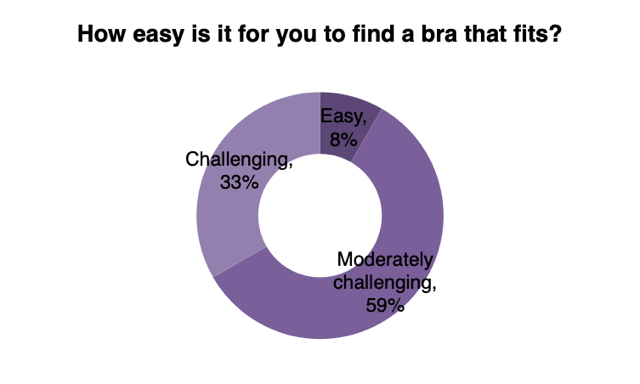
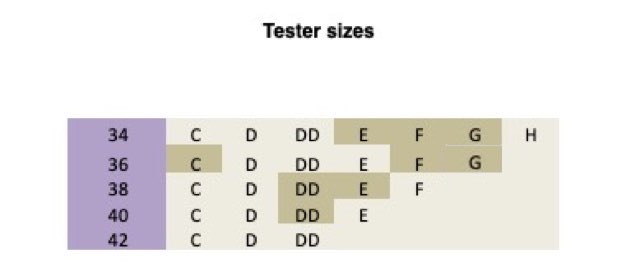
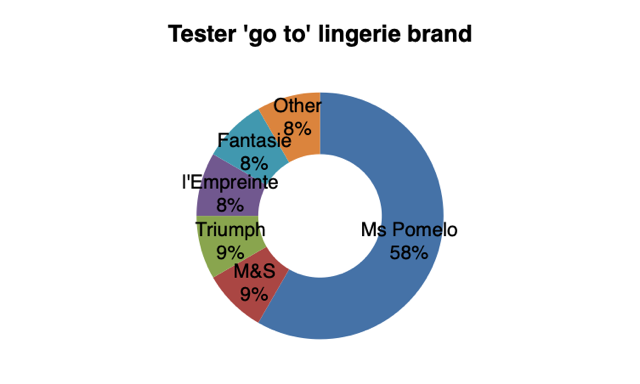
It was important for us to work with a diverse group, some of whom had previous exposure to Ms Pomelo. We wanted to test heavier cups in all band sizes, and it was also important for us to work with individuals who experienced challenges in finding a bra that fitted well. 42% of our testers were new to Ms Pomelo; and 92% had challenges in finding a well-fitting bra. This is why we feel our tester group was well suited for the exercise.

What kind of testing did we do?

We asked the testers to put the bras through normal wear. Some are health professionals with the NHS, some are office workers, and some have involving housework that includes gardening and looking after animals. We asked the testers to wear the bras for 7 days before commenting.

Key testing criteria

We primarily focussed on delivering the shape and the support, with maximum comfort possible for the nylon-lined cups.

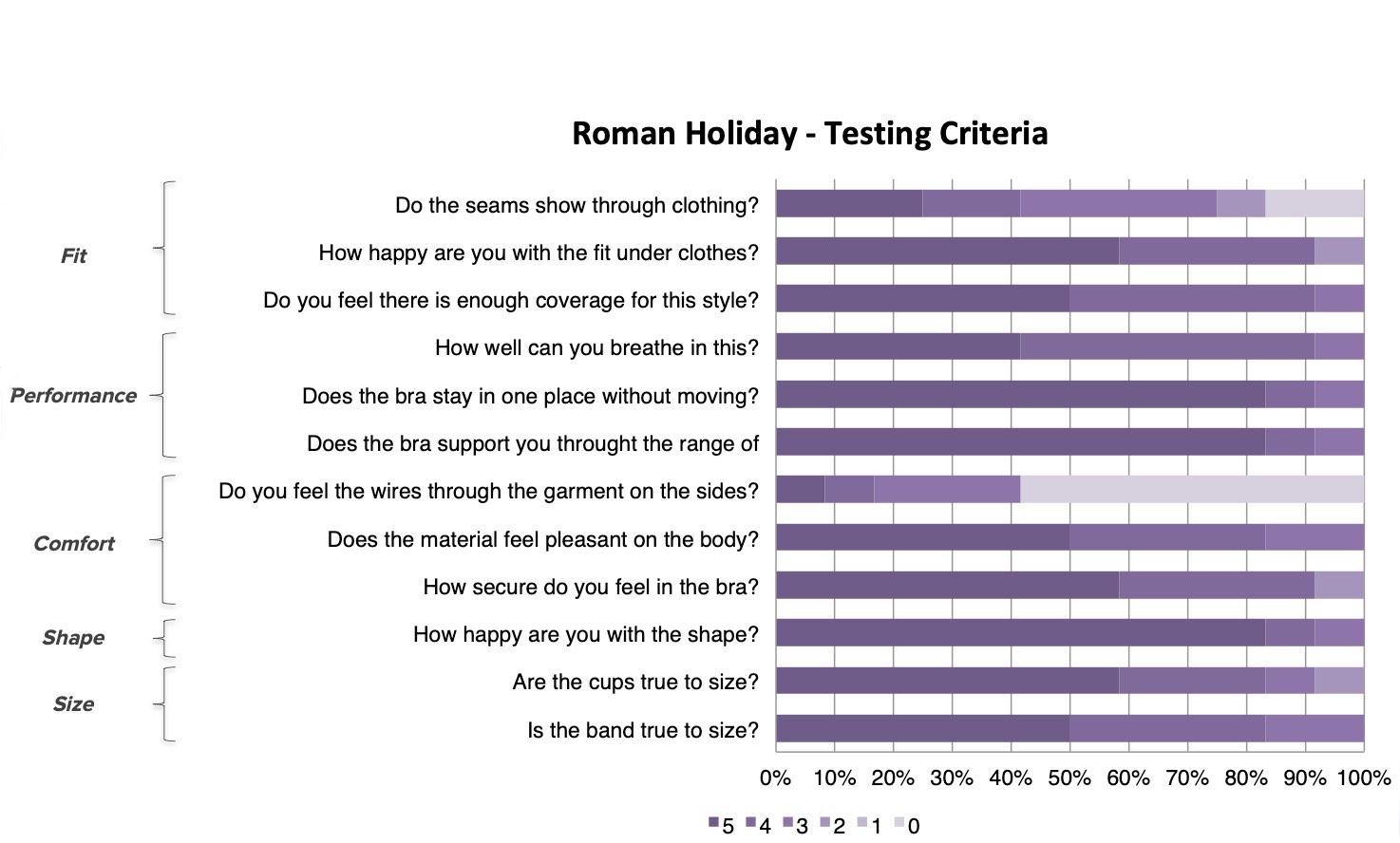
Testing criteria included sizing (is it true to size?), shape, comfort, fit (including fit under clothes), and performance. We asked the testers to answer numerically, picking a number between 0 and 5 with zero being their least- and 5 being most- accurate sentiment. On the chart below your can see “5” presented by deeper hues of lilac, and “0” by light grey colour. For example, in responding to question Is the band true to size? 50% of testers felt a strong ‘Yes’, and 33% gave it a 4 out of 5 ‘Yes’, and 17% – agreed less.

The following chart lists some of the testing questions. We are pleased to see the chart reflects strong positive sentiment for all categories and interpret the results as indication of future success for the style.

ms pomelo roman holiday testing criteria

Commendations

Testers unanimously commended the natural round well-defined shape and forward projection. They also were impressed with the support the bra delivered given its lightweight structure.

Wish list

33% of testers thought the lining could be swapped to cotton while the rest felt the nylon should stay as it makes the style lightweight. We are keeping nylon for now and will look into cotton-lined option later in the year.

In terms of colours, tester wish list included white, nude, pink, red, blue, and black.

Verdict & next steps

We are adding the style to the main collection. Working size scale: 34D-H, 36C-G, 38C-F, 40C-E, 42C-DD.

Over the summer we released 4 colours – Azalea, Black, Island Paradise, and Turquoise & Lime – all with the beautiful La Perla lace. They are available on our product page.

Questions?

If you have questions or comments on the product or would like to be our tester, please get in touch.